
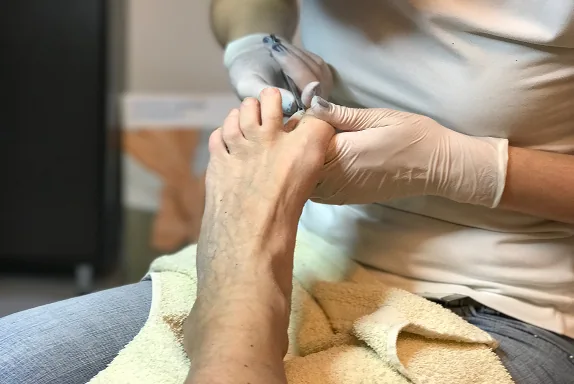
Choose a daily moment for a foot check
Look at the tops, soles and between the toes for a new cut, blister, redness or swelling. Use a mirror or ask for help if you cannot inspect an area comfortably.
Prepare for changes in routine
Travel, longer outings and different shoes can make a regular check easy to miss. Keep the routine practical and inspect footwear for rubbing or anything inside.
Have a plan for a new concern
Ask your care team whom to call about a new wound or skin change and what to do after hours. Do not wait for pain to appear before seeking advice about a diabetic foot wound.
Make the conversation useful.
Before an appointment, note when the concern started, what makes it better or worse and what you have already tried. Bring relevant records and the shoes connected with the problem. Ask what the next step is intended to achieve and when you should check back.